Showing posts with label Advice. Show all posts

Monday, July 9, 2012

"6 Signs You’re Behind in the Recruiting Process" by NCSA

Here is a great article that I found on the NCSA website written by JC Kibbey, that talks about the "6 Signs You’re Behind in the Recruiting Process." 

I think it's a great article that is worthy of your time to read. There is a lot of valuable advice here.  A 7th point that I would like to note is that YOU and your Parents need to be active in the recruiting process.  YOU need to reach out to college coaches to express interested in their program too.  YOU need to take the initiative too.  Don't just expect that since you "kicked the game winning field goal" that colleges will be knocking on your door.  Yes that might still happen, but you need to be proactive in the process as well.  

Also from a Specialists perspective it is important to attend evaluation camps, and even 'College Kicking Camps.'   At evaluation camps, you are being evaluated by kicking experts, which many college coaches reach out to for leads on top kickers, punters and snappers; and at 'College Kicking Camps' you'll kick in front of the college coaching staff members themselves that have some control over recruiting you.  In June, I posted about the upcoming "2012 College Specialist Camps" to find out when some of the bigger camps will be going on.  Hopefully you were able to attend a few of them.


I've reposted JC Kibbey's article below and the link to it online so you can read more about other recruiting tips with NCSA.


 http://www.ncsasports.org/blog/2012/06/27/6-signs-recruiting-process/

"6 Signs You’re Behind in the Recruiting Process." 
 by JC Kibbey

You’re naturally confident.

Right?

As an athlete, you have to be. When you’re sitting down at halftime, warming up in the bullpen, or on the blocks, you can’t afford to ask yourself: what if I’m doing this wrong? You just go.
Here’s the problem: that same kind of thinking that works great when you’re competing – no doubting yourself, no matter what – can kill you in recruiting.
You’ve got to admit to yourself when you make a mistake. Here are six of the most common ones.:
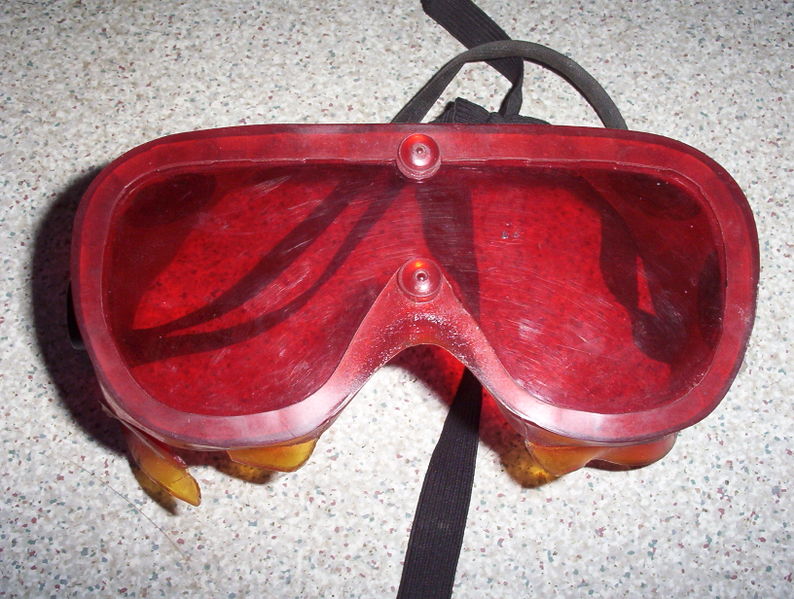
1. You get recruiting advice from people you know
Friends and family are great. None of us – especially those of us who eat, sleep and breathe sports 24/7 – could do what we do without them. Why are they great? Partly because they’re nice to us.
And that’s exactly why they should not be giving you recruiting advice.
People who are close to us, especially parents and even sometimes our coaches, can look at us with “love goggles” on – see the pair on the left? They are rose-colored. “You’re fantastic! You’re Division I material! The coaches will come running!” Truth is, probably 90% of athletes hear this from their friends and family, but only 2% of high school athletes go on to college. See the problem?
When it comes to recruiting, you need somebody who’s going to give you the honest truth. If you happen to know a college coach (who’s not in your family), maybe ask them. If not, talk to an NCAA-certified recruiting expert. Feel-good talk about where you can go won’t get you ahead – real talk will.

2. You don’t have a highlight video
This is pretty basic. Athletes get recruited because coaches want them. Coaches want those athletes because they think they will make the team better. Coaches find out that you can make a team better by seeing your highlight video. If they don’t know what you can do, how can they know they want you on their team?
To be fair – runners and swimmers, this is a little less important for you, because your times are so important. But not much – you’ll still need skills tapes, and meet footage won’t hurt. Think of it this way: you’re not the fastest runner in the country, which means there’s someone else with the same times as you. If a coach is looking at both of you, do you think they’ll pick the one with a video (whose form the coach can see), or the one without it?

3. You make athletics an excuse for bad grades
Think you can skate by with weak grades because you’re an athlete?
Everybody knows (or knew) one star athlete in their high school that thought so. Any parents reading, take a second and ask yourself: where’s that athlete now, who didn’t care about grades?
Did they go to college? Are they successful now? Do you even know where they are?
Even if you want to go pro – you have to have the grades, get into a good college and get exposure. If you were the next LeBron James, you’d know already.

4. You don’t have any letters
If you aren’t getting some kind of letters and you are in high school, this is not a good sign. Athletes who are in demand get letters from coaches, period. Maybe you need to step up your game. Maybe the coaches don’t know about you. But if there aren’t letters, there isn’t interest.

5. You only have letters
At the same time, letters don’t mean much without the follow-up, the coach communications, and the attention. NCSA’s founder, Chris Krause, had a boatload of letters as a high school student, but he almost missed being recruited altogether because he didn’t follow up. Letters are a step in the process, and they’re only as good as the coach communications, visits, and ultimately, the offer that you get out of them.

6. You think everything is going well
That last point – that letters are only as good as the offer that they get you – is true about everything in recruiting. It doesn’t matter if you’re All-State, getting letters from the top colleges in the country, taking visits, or appearing on SportsCenter and the cover of Sports Illustrated. Recruiting is over and done once you sign on the dotted line at your dream school. Until that point, everything is just an opportunity. And after you sign that letter – well, that’s when it really gets hard.
Avoid these mistakes and get elite recruiting advice from an NCAA-certified recruiting expert – click here or call 866-495-7727 to join the network.

Wednesday, May 23, 2012

How to Bounce Back From Disappointment

Kickology.com recently did a post where it asked kicking, punting and snapping experts for their advice on how to "Forget and Move On" after a missed kick or bad snap.  There were a lot of great tidbits of advice.  I also was able to share a "Painful" memory from a high school experience.  I'd like to share it with you:  One, to let you know that this experience can happen to many people, and Two, because even us Kicking Instructors are Human, and most of us have experienced the highs and lows of many game experiences.  We have valuable experience to teach you to prepare you to hopefully not go through what we did, or to at least be able to bounce back quicker.  Here is my "Excerpt" from the Kickology Article with a little more detail.


Question: How do you bounce back and forget after disappointment?
"I feel that it takes some time to learn how to block out or move on from a bad play. Sometimes it may take a few game experiences to learn what it takes to move on quickly. My first biggest learning experience came my senior year of high school. In our semi-finals playoff game, I missed a field goal by a foot to the left going into half time. It was a tough break, but what hurt most was that we ended up losing the game by two points. For a while I felt terrible and felt responsible for ending our season. But some great teammates, coaches and family of mine made me realize that there were so many other factors that happened in the football game that directly effected the out come of the game, that the fault of the loss wasn't mine. A few less holding penalties and dropped balls would have given us a few more opportunities to score to change the outcome of the game.

By the time I was in college, it was easier to move on past a bad kick or punt. I had played in more games and experienced more game scenarios. In our position it can be tough because we only get a few opportunities and all the eyes are on you. But just remember that there are 40+ plays in every game that can also effect the outcome of the game and it's not all one person's fault, it's a team effort."
Read more expert advice from the "Remembering To Forget" columns.
Expanded:
Looking back at my football career, this is probably the most painful memory, but it was a "Great Experience" in the fact that it helped me grow mentally when it came to college football or even pursued the NFL, in terms of handling disappointment.  At the time, when the phrase "Football is Life, and The Rest is Just Details" was popular, made famous by clothing line in the late 90s, it seemed like it was the end of the world for me.  But in the end when you look at the big picture, Football is JUST a game, but a great experience at the same time.  A lot of great character building traits come from playing team sports.  It's a privilege to play the game, and even to play the game at a high level.  In the paraphrased words of Coach Brad Anderson of Wayzata "It's ok for it to hurt or strike some emotion.  It means that it meant something to you."  I think it's a perfect thing to remember.  Athletes give it their heart and soul to do their best and leave it all on the field.  For every winner, there is a loser.  Someone learns a great life lesson, and someone learns the hard way.  But it's all a great lesson for life or sports to learn how to handle the highs and lows of life, or how to the same or similar situation again in the future.  I wish you all good luck in all your future activities and upcoming seasons.  Feel free to share some of your experiences below.

Thank you for your time in reading this article.

Chris Husby
Professional Kicking Coach and Owner
Special Teams Football Academy
Join our Facebook Fan Page!
Follow us on Twitter.
Follow us on Instagram.
Subscribe to our YouTube Videos.
CoachHusby@gmail.com
651-353-2660